Thursday, 17 May 2012

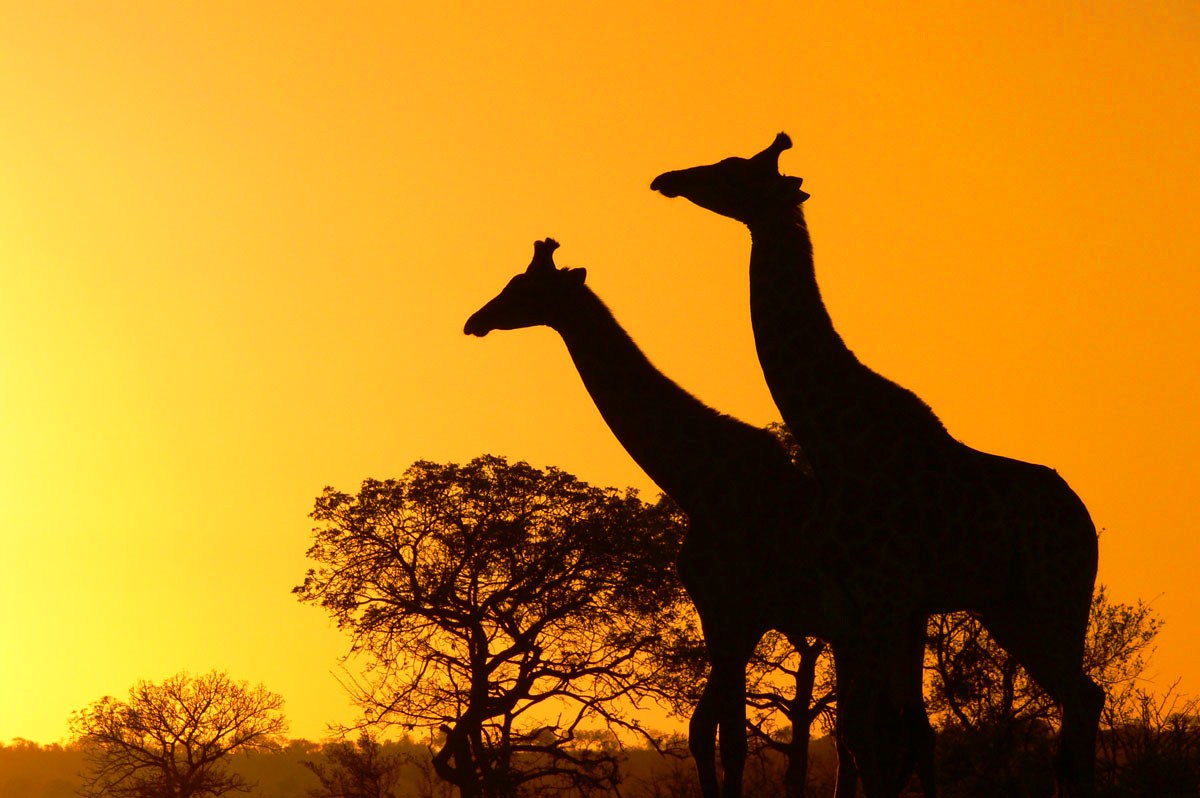
AFRICA IS BEAUTIFUL.

Images sourced from following website:    www.golberz.com/2010/05/most-beautiful-photos-of-africa.html


Tuesday, 1 May 2012

A PENNY FOR YOUR THOUGHTS 2.


  1. At least 80% of humanity lives on less than $10 a day.Source1
  2. More than 80 percent of the world’s population lives in countries where income differentials are widening.Source2
  3. The poorest 40 percent of the world’s population accounts for 5 percent of global income. The richest 20 percent accounts for three-quarters of world income.Source3
  4. According to UNICEF, 22,000 children die each day due to poverty. And they “die quietly in some of the poorest villages on earth, far removed from the scrutiny and the conscience of the world. Being meek and weak in life makes these dying multitudes even more invisible in death.”Source4
  5. Around 27-28 percent of all children in developing countries are estimated to be underweight or stunted. The two regions that account for the bulk of the deficit are South Asia and sub-Saharan Africa.
    If current trends continue, the Millennium Development Goals target of halving the proportion of underweight children will be missed by 30 million children, largely because of slow progress in Southern Asia and sub-Saharan Africa.Source5
  6. Based on enrollment data, about 72 million children of primary school age in the developing world were not in school in 2005; 57 per cent of them were girls. And these are regarded as optimistic numbers.Source6
  7. Nearly a billion people entered the 21st century unable to read a book or sign their names.Source7
  8. Less than one per cent of what the world spent every year on weapons was needed to put every child into school by the year 2000 and yet it didn’t happen.Source8
  9. Infectious diseases continue to blight the lives of the poor across the world. An estimated 40 million people are living with HIV/AIDS, with 3 million deaths in 2004. Every year there are 350–500 million cases of malaria, with 1 million fatalities: Africa accounts for 90 percent of malarial deaths and African children account for over 80 percent of malaria victims worldwide.Source9
  10. Water problems affect half of humanity:
    • Some 1.1 billion people in developing countries have inadequate access to water, and 2.6 billion lack basic sanitation.
    • Almost two in three people lacking access to clean water survive on less than $2 a day, with one in three living on less than $1 a day.
    • More than 660 million people without sanitation live on less than $2 a day, and more than 385 million on less than $1 a day.
    • Access to piped water into the household averages about 85% for the wealthiest 20% of the population, compared with 25% for the poorest 20%.
    • 1.8 billion people who have access to a water source within 1 kilometre, but not in their house or yard, consume around 20 litres per day. In the United Kingdom the average person uses more than 50 litres of water a day flushing toilets (where average daily water usage is about 150 liters a day. The highest average water use in the world is in the US, at 600 liters day.)
    • Some 1.8 million child deaths each year as a result of diarrhoea
    • The loss of 443 million school days each year from water-related illness.
    • Close to half of all people in developing countries suffering at any given time from a health problem caused by water and sanitation deficits.
    • Millions of women spending several hours a day collecting water.
    • To these human costs can be added the massive economic waste associated with the water and sanitation deficit.… The costs associated with health spending, productivity losses and labour diversions … are greatest in some of the poorest countries. Sub-Saharan Africa loses about 5% of GDP, or some $28.4 billion annually, a figure that exceeds total aid flows and debt relief to the region in 2003.Source10
  11. Number of children in the world
    2.2 billion
    Number in poverty
    1 billion (every second child)
    Shelter, safe water and health
    For the 1.9 billion children from the developing world, there are:
    • 640 million without adequate shelter (1 in 3)
    • 400 million with no access to safe water (1 in 5)
    • 270 million with no access to health services (1 in 7)
    Children out of education worldwide
    121 million
    Survival for children
    Worldwide,
    • 10.6 million died in 2003 before they reached the age of 5 (same as children population in France, Germany, Greece and Italy)
    • 1.4 million die each year from lack of access to safe drinking water and adequate sanitation
    Health of children
    Worldwide,
    • 2.2 million children die each year because they are not immunized
    • 15 million children orphaned due to HIV/AIDS (similar to the total children population in Germany or United Kingdom)
  12. Rural areas account for three in every four people living on less than US$1 a day and a similar share of the world population suffering from malnutrition. However, urbanization is not synonymous with human progress. Urban slum growth is outpacing urban growth by a wide margin.Source12
  13. Approximately half the world’s population now live in cities and towns. In 2005, one out of three urban dwellers (approximately 1 billion people) was living in slum conditions.Source13
  14. In developing countries some 2.5 billion people are forced to rely on biomass—fuelwood, charcoal and animal dung—to meet their energy needs for cooking. In sub-Saharan Africa, over 80 percent of the population depends on traditional biomass for cooking, as do over half of the populations of India and China.Source14
  15. Indoor air pollution resulting from the use of solid fuels [by poorer segments of society] is a major killer. It claims the lives of 1.5 million people each year, more than half of them below the age of five: that is 4000 deaths a day. To put this number in context, it exceeds total deaths from malaria and rivals the number of deaths from tuberculosis.Source15
  16. In 2005, the wealthiest 20% of the world accounted for 76.6% of total private consumption. The poorest fifth just 1.5%:
    SOURCE:    http://www.globalissues.org/article/26/poverty-facts-and-stats

Tuesday, 24 April 2012

NIGERIA'S SUBSIDY FUEL SCAM!


Nigeria fuel subsidy report 'reveals $6bn fraud'

Protest against removal of fuel subsidy in Lagos, Nigeria - 9 January 2012Nigerians see cheap fuel as the only benefit they get from their country's oil wealth

Related Stories

Nigeria's parliament has discussed a report said to reveal that $6bn (£4bn) has been defrauded from the fuel subsidy fund in the past two years.
The debate, which was televised live, made official findings that have been widely leaked in recent days.
The fuel sector probe was set up in the wake of angry nationwide protests in January after the government tried to remove a fuel subsidy.
Nigeria is a major oil producer but has to import most of its fuel.
Full-page adverts
"We are fighting against entrenched interests whose infectious greed has [hurt] our people," House of Representatives Speaker Aminu Waziri Tambuwal said as he opened the two-day debate, reports the AP news agency.
"Therefore, be mindful they will fight back and they normally do fight dirty."
The 205-page parliamentary report uncovers a long list of alleged wrongdoings involving oil retailers, Nigeria's Oil Management Company and the state Nigeria National Petroleum Corporation.
According to the leaks, a total of 15 fuel importers collected more than $300m two years ago without importing any fuel, while more than 100 oil marketers collected the same amount of money on several occasions.
The leaked report also says that officials in the government of President Goodluck Jonathan were among those who benefited from the subsidy fund.
Many of the people named in the document have denied any involvement in fraud, with some taking out full-page adverts proclaiming their innocence in local newspapers.
The BBC's Bashir Sa'ad Abdullahi in Abuja says at least some of the findings are likely to be adopted by Nigeria's lawmakers because of the huge public anger over the attempt to withdraw the subsidy.
Many Nigerians were livid when they were told by their government that the fuel subsidy was economically unsustainable - only to now find out the scale of fraud in the operation of the fund, our correspondent says.
Despite being a major oil producer, Nigeria has not invested in the infrastructure needed to produce refined fuel, so has to import much of its petrol.
The annual $8bn subsidy means prices are lower than in neighbouring countries - and correspondents say many Nigerians see cheap fuel as the only benefit they get from their country's oil wealth, much of which is pocketed by corrupt officials.
After a week of street protests and a general strike, the government agreed to restore some of the subsidy - and reduce the pump price of petrol to 97 naira (about $0.60) per litre after it had doubled to 140 naira when the subsidy was removed without warning on 1 January.
But President Jonathan defended the subsidy cut, saying Nigeria must either "deregulate and survive economically, or we continue with a subsidy regime that will continue to undermine our economy."

SOURCE BBC.

Monday, 23 April 2012

WEST AFRICA IN TROUBLE YET AGAIN.....

Nigeria, very shaky political and security menace. Togo still not out of the dark politically, Mali a total mess. Ivory Coast, President Quatarra still strugling for unity and peace. Guinea Bissau, again for the upteenth time the military junta arrests a perfectly democratically elected government. Senegal just about scraped out of what could have been a disastrous election, with the incubent trying to stay for another term. Yet the West looks on shamelessly as long as their much needed resources from Africa, remain intact, no matter which regime, whether legitimate, or unligitemate guarantees their exports. Neo Colonialism, or simply African foolishness, and sheer incompetence? You be the judge to that.


Sunday, 15 April 2012

AFRICAN CINEMA ON THE RISE.....


The 80's was an excellent decade for African cinema, when talented and old school filmmakers had access to finance from France mainly, and some other European countries, filmmakers, the likes of Solyeman Cisse who made such an excellent film like "Yeelen" Idrissa Quedraogo from one of Africa's poorest countries, Burkina Faso with a film "Yaaba" Flora Gomes from yet another very poor country, Guinea Bissau, with films such as "The Blue Eyes Of Yonta" and "Po Di Sangui", to mention but a few. In the 90's and in the new millenium state funds from European countries simply crashed astronomically. The world economy crashing due to amongst other factors such as 9/11 only jeopardized the financing of African filmmakers even further. But a new generation of African filmmakers have turned to private equity, product placement, and other maneuvres to insure their creative flare, ends up in the screens. In 2005 a South African film named "Tsotsi" directed by South African director Gavin Hood, won the Oscar for best foreign language film, and in 2006 the Golden Globe award for best foreign language film. In 2009 Neil Blomkamp directed the science fiction thriller 2009, and in the opening weekend in North America it grossed 37 million dollars. It was nominated in 2010 for 4 oscars, including best picture, best adapted screenplay, best visual effects, and best editing. All a big boost in morale to upcoming African filmmakers  all over the continent to say the least. As a filmmaker myself, I must confess that this has been the missing inspiration, a lesson in the modi operandi to follow, to put African cinema back into the world stage as it once was in the 70's and the 80's albeit in an art house kind of way. Well the survival of African cinema lays as I have been saying for years in producing viable commercial films, that can find a world audience crossing over from art house cinema, don't get me wrong; still fundamental to the medium,  to commercial cinema. This ends the dependancy cycle on European state financing, for long a viscious cycle, and forcing filmmakers to seep private equity. This raises the stakes, films have to be of extremely high quality and standards to meet commercial market demands. 
Last Friday I went to see such an excellent film in Lagos, Nigeria. "Phone Swap"Executively produced, produced,  directed, and marketed by a young upcoming director Kunle Afolayan who managed to raise aproximately 400,000 dollars from both product placement, and private equity, showed to me what I have been writing all above. The film still way below in budget to your average American or European Independent film budgets, and it's South African counterparts, by millions of dollars,  proves that; with loads of passion, hard work, perseverance, business sense, and with the spirit to never give up, that African Cinema is yes, on a high again. This beautifully shot film, with excellent global technical  standards, superbly acted, a romantic comedy, that grasps you from beginning to end, making you laugh practically through out the entire film, is of absolute no surprise, that it has become Nigeria's highest grossing film at the theatres ever, in ten days at the theatres earning roughly 15% per cent of it's production cost, and that  it has signed major international distribution deals, in England and soon in the US. The director and I met at a recent film copyright seminar last week in Lagos organized by the World Intellectual Property Organization, and I was really taken aback, how humble, how friendly, and how open this young director was. At the seminar he shared his experince of making this film and the other two he had made prior to "Phone Swap" with an incredible open mindeness, and open spirit, thus firing up potential directors at the seminar, who thought that all was almost lost. 
So the way forward is to have African films run the commercial distribution network, competing in as many international markets as possible, encouraging private investors, that these can truly be very viable and successful investments, as recent African filmmakers have proved, and with this more quality and superb African movies can be made, and reach the international world stage.


Tuesday, 10 April 2012

AFRICAN UNITY

African union is vital to the progressive transformation of Africa. Take heed it is happening, for the last seven years no less than eight African countries have had their Gdp growth set at  at least 4% unlike most European countries. But unity essentially begins at home, if in our own countries there is disarray the likes of Mali, Sudan, Congo Kinshassa, and some other countries that are still fragile, suchas Ivory Coast, Togo how do you genuinely sit down and work in unity when there is none at your home. But the AU has strived on, and  in recent years has played a more active role to send troops to pacify conflicts in Africa, amongst a few other positive steps, such as the cutting of red tape on the passage of AU citizens and Goods. But the AU established way before the European Union known before as the O.A.U (Organisation of African Unity) is still walking baby steps, the old project to connect North Africa to South Africa by rail, a noble one, is still on paper somewhere. An excellent project that would make it easy, and very economic, unlike air transport, to transport  citizens and goods from Africa. This project  must re-emerge again as a top priority, as the one of the setting up of a Central Bank Of Africa vital, amongst many other fundamental projects that would substantially contribute to the progressive transformation much needed in our ancient aging but beautiful continent. Rail ways and banks may not be such a priority in the view of other problems that might nedd more urgent priority, and they are many, fast response to hunger crisis amongst others; but they still hold their fundamental significance on the long road to making our continent we can be toatally proud of as a whole. But then Im not a politician,  just a pure pan-africanist in soul. And Africa is changing.......


Sunday, 1 April 2012

A YEAR IN THE REALM OF NORMALITY...

Who would not love to wake up one morning, for a week, for a month, for a year, and not listen in the radio, or read in the newspaper, or on some major international news station, that there was no conflict in this world for that period. That nations could execute fair trade with one another, that developing countries had far, far,  more access to trade and sell their goods with developed countries, thus bringing poverty to an all time low, education would be shared almost equally globally, thus reducing ignorance, and promoting a global understanding, people could have more control of their lives, and bring bad governments down, without conflict, without bloodshed, pain, and total destruction. Some western countries could make their deffence industries number 10 in their economies, and not number one, as it is  in some cases, thus cutting vastly the sales of arms specially to war lords who pry in death and total devastation, so they can live a life of luxury oblivion to their indirect apocalypse of blood.  People could access other cuntiries far more easily in search of more enterprising lives, be it through work, business, or otherwise. Man is on a quest to take people in mass to the moon, how about taking far, far,  more people of various nationalities, around the planet  we live in earth, promoting peace through human exchange, and understanding. Allowing people to flow easier, where security or over burden of economies were not threatened. The UN, fundamental,  in resolving key world issues, could be mandated, change it's constitution to remove severe corrupt regimes that deliberately keep their country and people in total shambles and misery; regimes, that do not even truly understand the meaning of the term  "human rights", without having to wait for the passing of complicated resolutions that can take months to pass, due to over politicking, and sometimes sickening bureaucracy. And the result is the discriminating slaughter of thousands of their own citizens without anyone being able to save lives in time save the total destruction physical, psychologically, and otherwise. Religious leaders from all over the world, from every religion possible, would have several annual conferences to promote understanding, and genuine peace betweem religions, for we all pray to the same God don't we? Selfish economic interests would be shelved for this same period of time, a year, a year only. A year without pain, bloody death, complete destruction, people dying of hunger, without sheer madness sheer contempt and hatred  for your fellow human being. A year where billions of smiles would be lit every day, instead of tears, anger, frustration, hatred.  Utopia you call it. Pure common sense to me. If only just for a year mankind could be normal.....